Source material
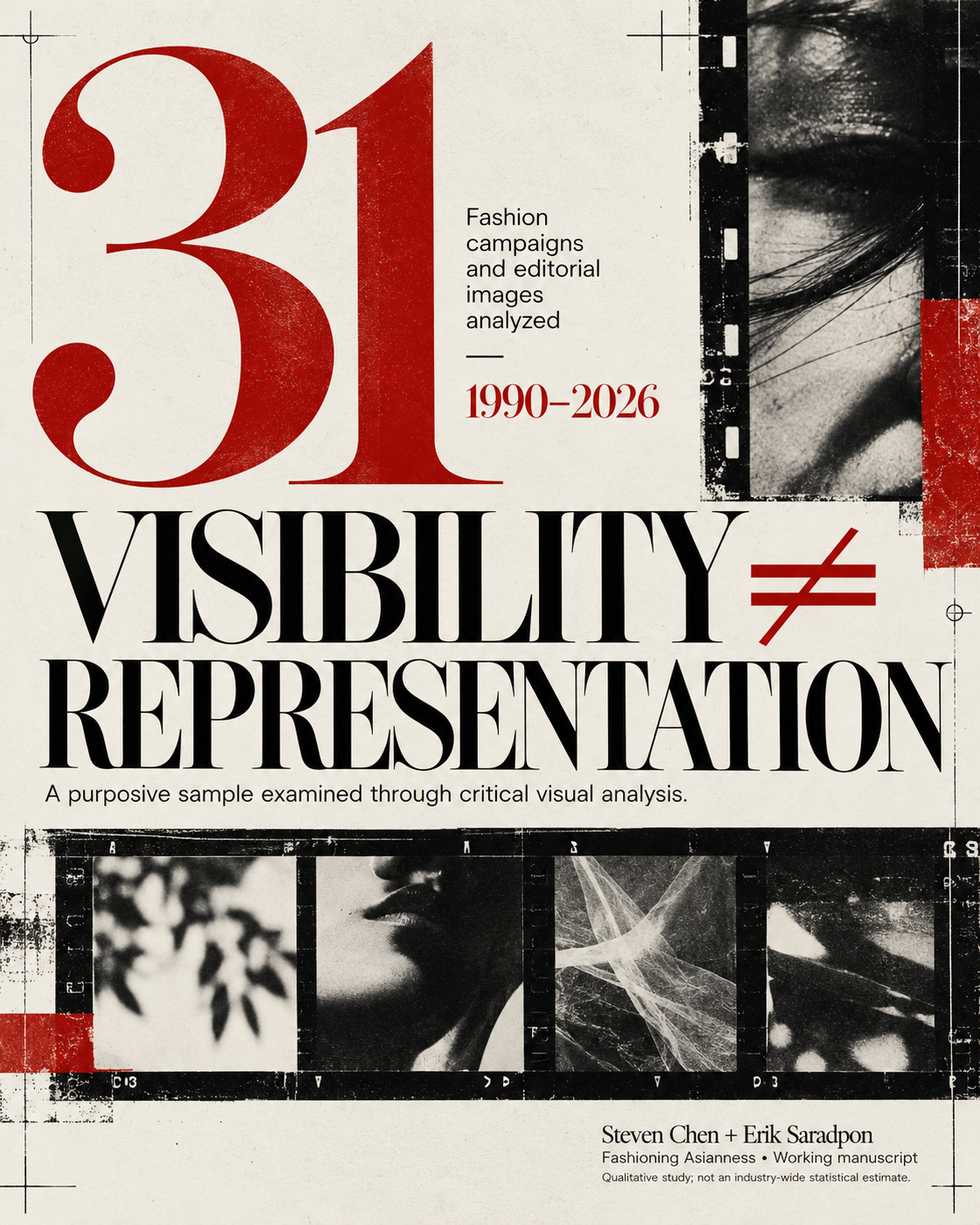
The full research manuscript I coauthored with Steven Chen.
What I created
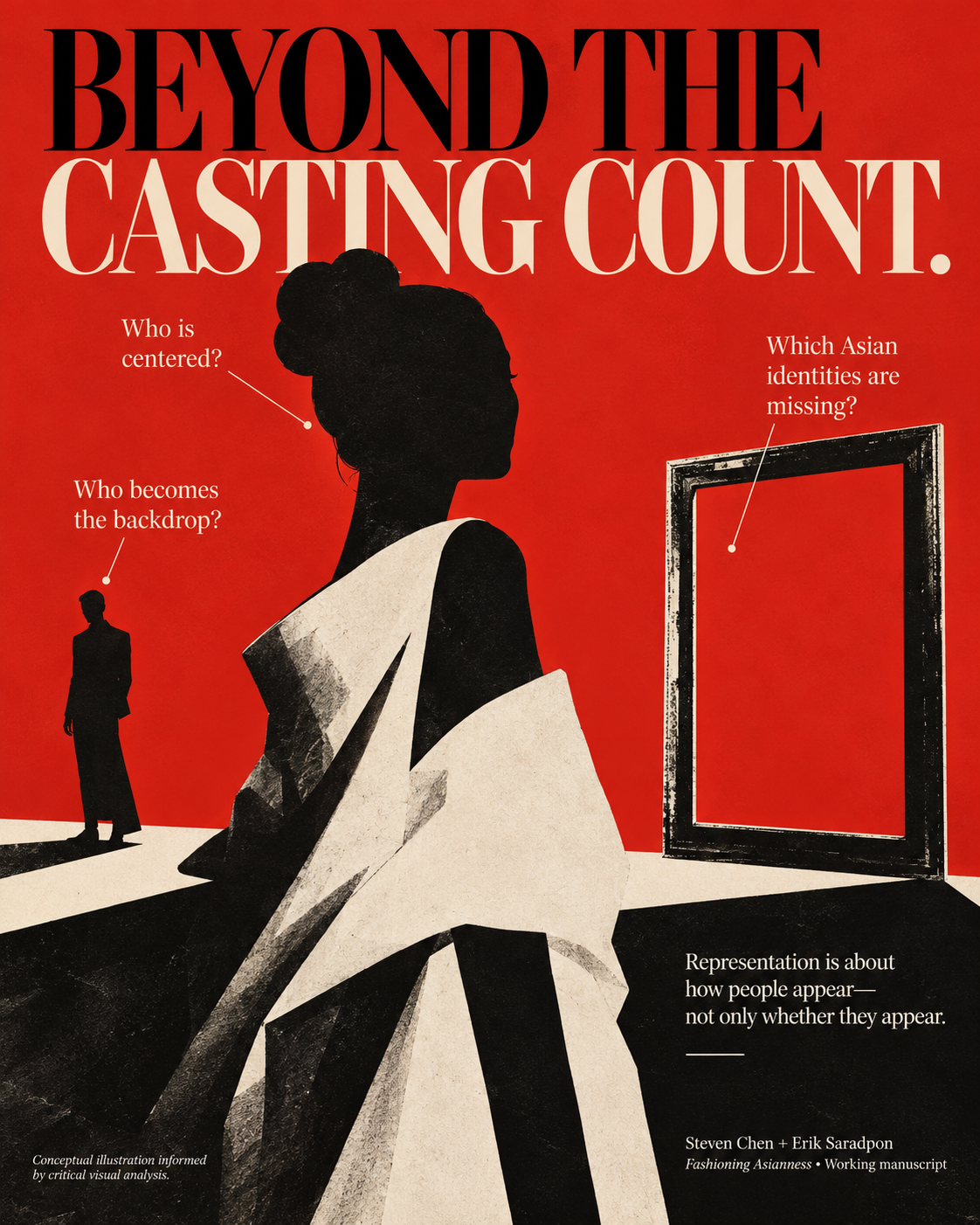
I adapted our findings into visual summaries and a research poster.

Streetwear Politics
Original essay
An examination of Black culture’s influence on streetwear, luxury, and the line between appreciation and appropriation.
Source material
The full transcript of the 22-minute Anne Olin interview I directed.
Interview Transcript
Hi. I'm Anne Olin, president and CEO of Charitable Ventures and the proud founder of the OC Votes program.
OC Votes is a campaign to get out the vote. Every election cycle that focuses on nonprofits,
So when I think about who knows what the community needs the most, I think about nonprofits and the leaders who work in the community and see how policy actually impacts the people in our neighborhoods. And so OC Votes is about civic engagement. It's about getting out the vote at the ground level.
For populations that may not think that they have a voice or a vote, but nonprofits know how to reach them. And nonprofits have strong opinions about the things that matter most.
So the idea of OC Votes came out in the middle of the pandemic. So it was 2020.
And Charitable Ventures was also focusing on the 2020 census and trying to get the census count up. And we were doing it without any contact. Because we had all gone virtual. And so nonprofits came together in a network and got incredibly creative. Staying outside for the most part and staying virtual for the other. On getting the message out about why the count mattered.
And, we ended up doing a really fantastic job in Orange County, getting our census response rate as high as we could, given the circumstances. At the same time, we headed into the election season. And so we took the same network and the same strategies to reach hard to reach communities. And we pivoted from census to the election and it worked.
And so ever since 2020, every election that we have, we raise the flag again and connect the nonprofits who can reach the people to the most relevant recent information about voting and civic engagement that we can get to them.
That's good. You're very affirming. Okay. And there's an obvious problem here. But what is the main problem that you hope that OC Votes is looking to resolve? So it is a time of amazing change, policy change, economic change. And I think in terms of our democracy, I think some of our citizens, some of our citizens don't believe that their vote matters.
And there was a lot of misinformation and literal disinformation about the power of the vote, the ability to vote. And so just getting community members access to trusted data, trusted information, where to vote. Did their mail-in votes matter? What are the policy issues? Why vote? That is a critical. Those are critical pieces of information to help, community members feel engaged and feel like their vote matters.
I think OC Votes, the other part of OC Votes that's so powerful is that nonprofits are already trusted messengers bringing health information, education information, economic development information, bringing civic engagement information along the same communication pathways. It just makes sense. And nonprofits are trusted messengers that can get trusted messages out.
Do you think in this video we're up, it would be okay to name some of the trusted, like, like people? Yeah. Sure. There's so many. Maybe if you could speak of them in a way that is like. Yeah, now, like, we really see the work that so-and-so is doing. Yeah. Okay. So do you think this would make other ones or smaller ones feel like we're excluding them?
Or maybe throwing some of the smaller. I was going to say I'm I think I can thread this needle. So what I would say to that is, you know, there are more than 5000 nonprofits in Orange County alone. Some of them you may know Goodwill, Orange County United Way, Easterseals, Working Wardrobes. These are trusted, community-based organizations that do a lot of good.
Some of them you can't see some of them you can't. You don't know that they're there. Pacific Islander Health Partnership. You know, Orange County. [organization name unclear]. Project Kinship. Everyone has a focus and a mission, but they are all able to reach, Orange County residents with critical information, both about their mission but also about how to be a citizen of Orange County.
I love that. I love that part. Okay, that actually started with the county. Okay. Ooh, that was a great. We got lucky with that. Okay. Yeah. That was okay.
Metrics. Okay. Thinking about that. Okay. I mean, in your own way. What does success look like? Even if it's not metrics into what the success look like? So let me talk about this year. So this year OC Votes is going social. And in years past, we you know, got critical information out. We had webinars. We brought nonprofit leaders together and connected them to other systems, other resources that were strong on civic engagement and, you know, trusted information.
This year, we're highlighting the nonprofits themselves, and we're asking them this critical question, why do you vote? And every nonprofit has a mission whether it's around health or youth or mental health or housing or reentry. Every nonprofit has a reason for being, and it probably drives how they, as citizens of Orange County, vote. So we're asking the question based on your mission, why do you vote?
And we're going social, and we're bringing, the power of the nonprofits and the passion of the nonprofits into this campaign. And we're asking them to spread the word. And so, so far, we don't know how many metric. I don't know how many people are in. Maybe. Maybe what I'll say is we're hoping that hundreds of nonprofits join the campaign and promote their why through this social campaign between now and Election Day.
Let's do that again. We have about a dozen in the queue right now. Okay, wait. You might say it again. Yes. Okay. That one I was just giving you. Okay. We have about a dozen. So, let's see. What was I saying? We are hoping that hundreds of nonprofits join the campaign. Share with us what their why is for voting, and that they share it with their constituents between now and Election Day.
I think you introduce something exciting or missing a critical part of how we make it easy for the nonprofits. Oh, okay. Okay. What we're doing this year is, in addition to being social, is we're taking, the burden [unclear]. Yeah, we're doing the work. Okay. We're supporting. You know what I'm saying? Okay. So we'll say so this year, OC Votes is, [false start; unclear] this year OC Votes is going social.
I'm going to keep that. Okay. I would love to sit for you to start with something cool we're doing. Okay. And then to explain the process. Okay. Like frictionless. Okay. Okay. Something cool we're doing this year. Okay. Yeah. Three, two. Something cool. We're doing this year is doing a lot of the work for the nonprofits. All a nonprofit has to do is come to our website.
Give us three images and let us know their why. And we are creating beautiful graphics that we post on our campaign. And we're asking them to post on all their social media as well together. We hope to reach hundreds of thousands of residents in Orange County with our collective why voting matters, and why nonprofits are uniquely positioned to talk about the issues that matter.
Perfect. That was good. That was good. That was really good. I love it. That was good. Yeah. Yeah. That was good. Okay. [unclear] speaking, like leadership. [unclear] I can do it, but I'm a high introvert. So I am not a good front of the room person. High introvert. I you are surprised? Most people are.
Yeah. So, like, my team was trying to throw me in for a nomination for an award and I'm like, please, if you love me, please do not do this because I hate going on stage. Like, I shake. [unclear] Yeah, but I. Back of the room, girl. I'm fine. Yeah. So what about the internal functions where it's maybe your org and you get to celebrate with you?
I don't mind. Okay, I can, I can speak. I just don't like to be the center of attention. That's. Yeah. Yeah. Okay. Yeah. Okay. What other questions? This is good to partner with community org. I think we got that. Okay. What else can I say? What do you hope people feel when they discover OC Votes? Whether it's down to constituents of the the orgs or maybe the partner orgs themselves?
What are you hoping that they feel when they discover this. So you know what I'll say about OC Votes or the thing that I'm most proud about for OC Votes is getting nonprofits centered in the important policy conversations that we need to have as a community. And I think there's a bias because nonprofits are supposed to be nonpartisan.
They often get excluded from the critical conversations around policy and and community decisions, but they are central to them because no one's better than a nonprofit expert at understanding issues. And understanding the policies and the legislation that's going to make a real positive difference. So getting nonprofits centered in this conversation, getting nonprofits to raise their hand and say, I think this issue is critically important and this is why I vote, gets them into the conversation where they—
And I think for too long, nonprofits have been pushed out of these conversations in an abundance of caution so that they're not perceived as being political. But they don't have to be political to have strong policy opinions.
That's my way. Nonprofits should be at the heart of these conversations, not peripheral. I like that. Can you say that by itself? Yeah. Nonprofits should be at the heart of these conversations and not peripheral. Can you do that one more time and say no in the peripheral? Oh, not in the. Okay. That might be stronger. Yeah. Nonprofits need to be at the heart of these conversations and not in the peripheral.
I love that you [unclear] a little volume. Oh, okay. You could make that. Yep. Not in the peripheral. Okay. Orange County nonprofits need to be in the heart of these conversations and not in the peripheral. That was great. Okay, one more time to Orange County. Nonprofits need to be in the heart of these conversations and not in the peripheral.
Okay. Okay. You've answered this. I might go other ways, but. Sorry, I'm all sweaty. Okay. It is another one. It's okay. But it's also like pressure. You don't look. Okay, good. Okay. What makes this campaign different?
Okay. I would say this year the twist as compared to what we did in 2020 and 2022 and 2024, is, is the focus on the nonprofit missions themselves. And so as we mine their why, we're also lifting up their mission and the connection they have to stronger, healthier communities. And I'm proud that we're doing that. That's solid.
That's that sounds different than everything else. Okay. Yeah. Let me let me build that real quick.
I love that. And in terms of community, what type what type of community. Are we trying to build together I mean people think the United Way holding hands are crazy. But that doesn't look like community for some people. So what are you. What do you envision for community. We do this together. Yeah. Yeah.
Because I know you have visions. I do, I do. I see the power of the nonprofit sector is that it can reach into every corner of our community, and we are only as strong as our weakest community members. And so when we think about, the safety net of services, when we think about our neighbors that may be falling through the cracks, that impacts all of us.
And so community well-being, community health, it is holistic. It is across all issues and all populations. And when you have a network of nonprofits, some of our nonprofits are large enough to cover the entirety of Orange County. But most of our nonprofits just take a piece. A small mission and a small population. But together we can reach everyone.
I love that. Okay. Do you think that through this, we're at the end of it? Okay. Okay. I think for this last part.
Any. Any. Yeah. What I would say, you know, what I'd say to the Orange County resident who has the opportunity to vote. Don't squander it. You might have just turned 18. Your voice counts. Your opinion matters. You may have just gotten out of the system. Your vote counts. Your opinion matters. And what I would say to my nonprofit colleagues is that their voice matters and that they can impact this community.
With trusted information and critical, support. And they need to get involved. So from every individual voter to us as an industry, we need to get the word out that engagement and participation in democracy makes us all stronger.
That's well-said. I do. If I'm being honest, it's just another degree of, like, reach. Like. Like if you're older, if you're a senior, if you're on this, if you're that. Okay. It's almost like the Mickey Mouse Club where we need to do, like, a roll call. Okay. If you're, if you're a youth, if you've just turned 18, if you just got out of the system, if you are an elder.
If you—if you're an immigrant—[unclear]—if you're a naturalized citizen. What's the roll call?
Or maybe I stay a little more generic, and I just, you know, maybe it's like right now, as elections become more and more contested. People don't think their vote matters like that. So maybe maybe go broader. Can we start there? Let's let's start there. Okay. Let's do that right now. So in a time of this this level of political volatility.
The danger is that people don't think their vote matters. But we know that's not true. Every single vote matters. Whether you've just turned 18 or the senior going on Medicare. Your voice and your vote makes our community stronger. And so that's what OC Votes is about. Okay. You you give me the edge. Okay. Would you be comfortable saying let's let's hit different clusters of people.
Okay. And follow it with your vote matters. Like if you could if you could do this to the camera and say if you just turned 18 and are eligible, your vote matters. If you were a senior entering the Medicare Medicare system your vote matters. If you are if you are recently, if you're reentering society or something like you do, if you're reentering the community your voice matters.
I don't know if you know I'm trying to do the roll-call block. I could write them down.
Youth senior reentry.
Any, any way to address the marginalized or like. Yeah, that's where I was going. It's like, if you've experienced homelessness, I don't know if that's the PC term anymore if you've been unhoused. Yeah, that is that is correct. Is that better? I would use that and I'll fact check it. Okay.
I'm trying to say.
You know, I'm, I think I think I'm going to pull away from the roll call. Okay. Because I think my strongest voice is really the nonprofits. Okay. I'm with you. Okay. I'm just having that feeling. Yeah. Okay. This is good. I hope there's something good in here.
Yep. Three, two. So my call to action for my nonprofit colleagues is to join the campaign. Yep. Perfect. Perfect. Yes. If you do, you just need to get that in the back.
She rolls by. Yeah. Okay. Ready? Yep. Three, two. So my call to action to my nonprofit colleagues is join the campaign. Share with us your why and get the word out. That was perfect. Okay, well, let's do another one, because it was so perfect. Okay. Ready? Same thing. Yep. Okay. Three. Two. So my call to action to my nonprofit colleagues is join the campaign.
Share your why with us and get the word out. That's perfect. Cut.
nonprofits and the leaders that run them are nonpartisan.
But that doesn't mean they're not distinctly engaged in critical community issues and policy.
Source material
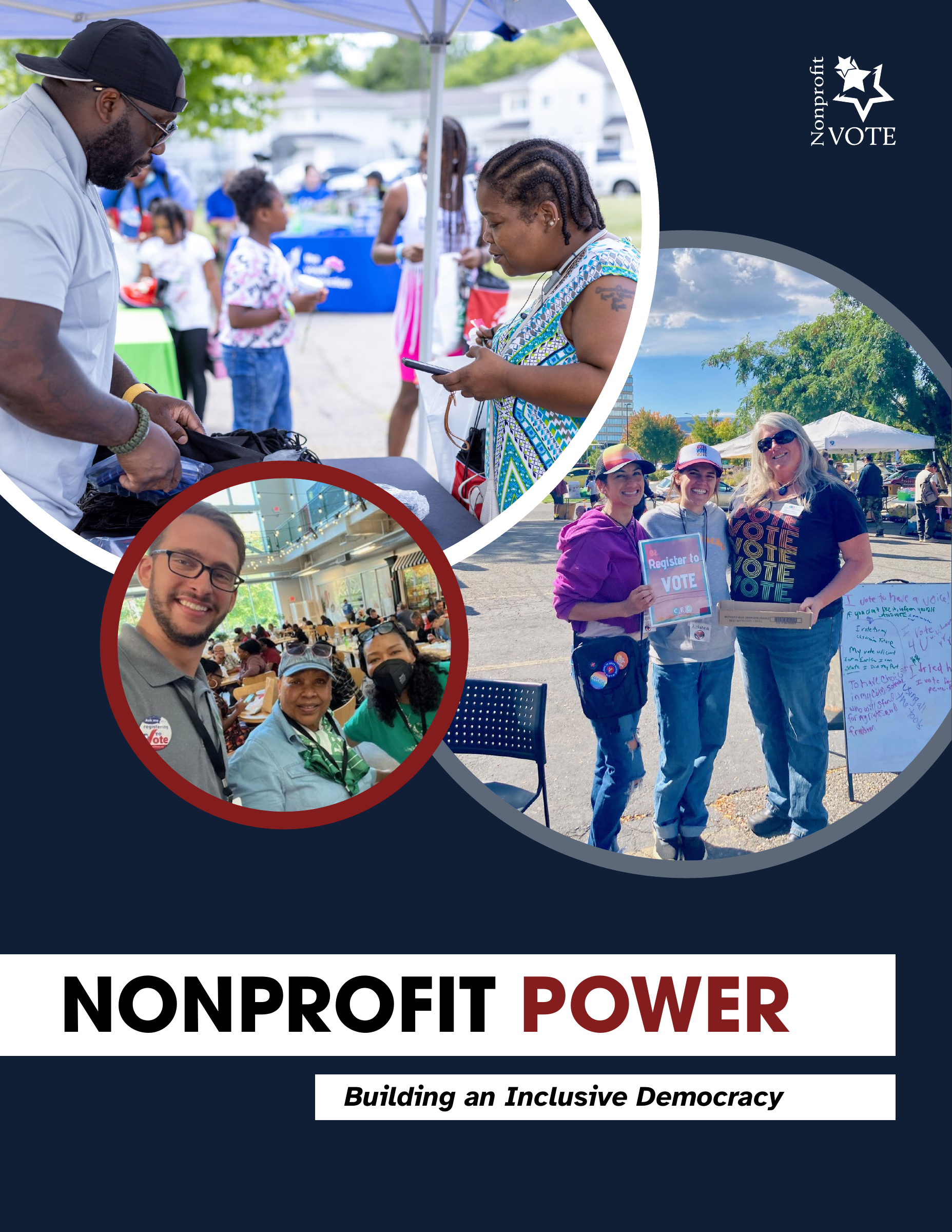
Nonprofit VOTE’s full Nonprofit Power report.
Source material
The full California nonprofit voter assistance guide.
What I created
I edited her responses into a campaign film and four social videos.
What I created
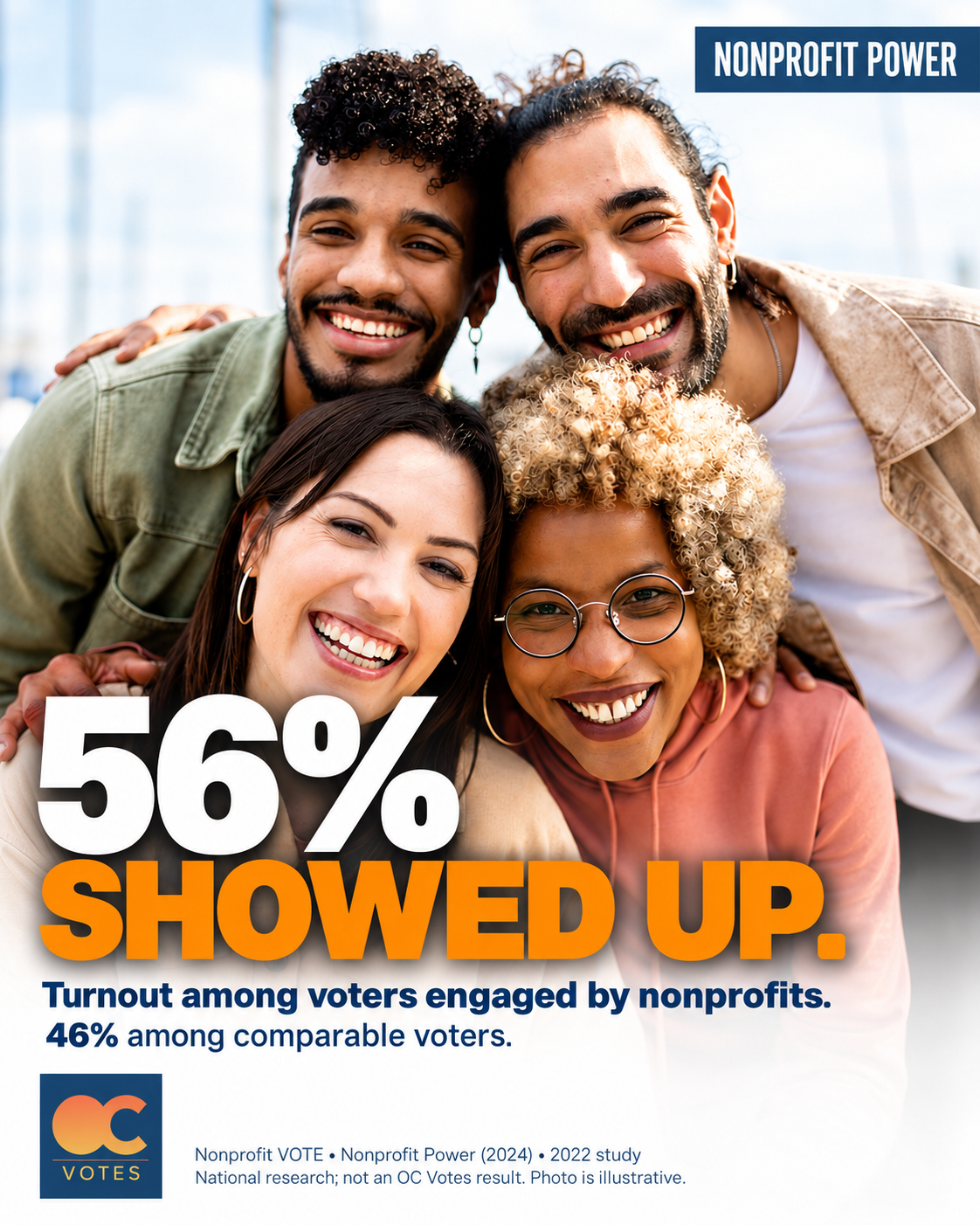
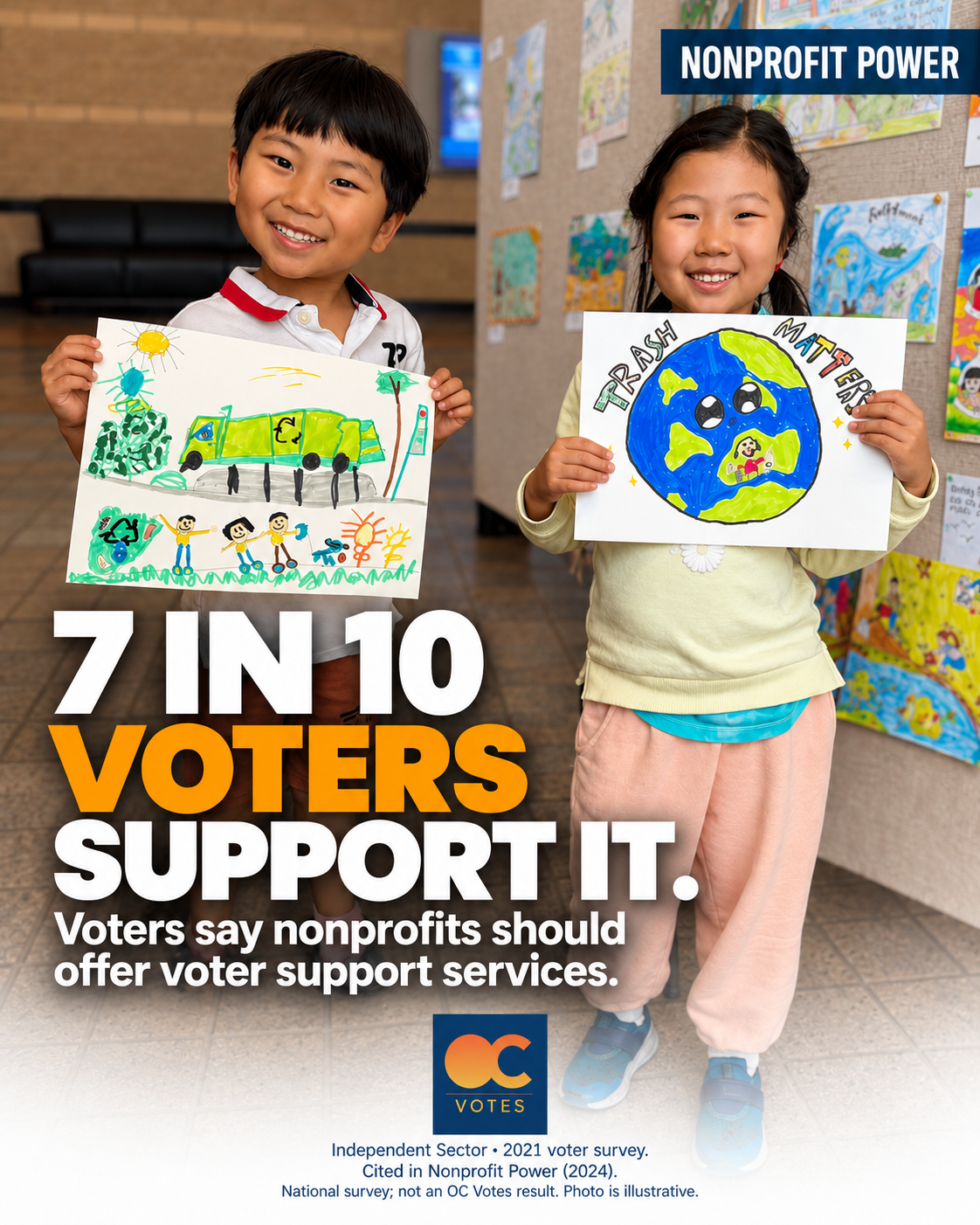
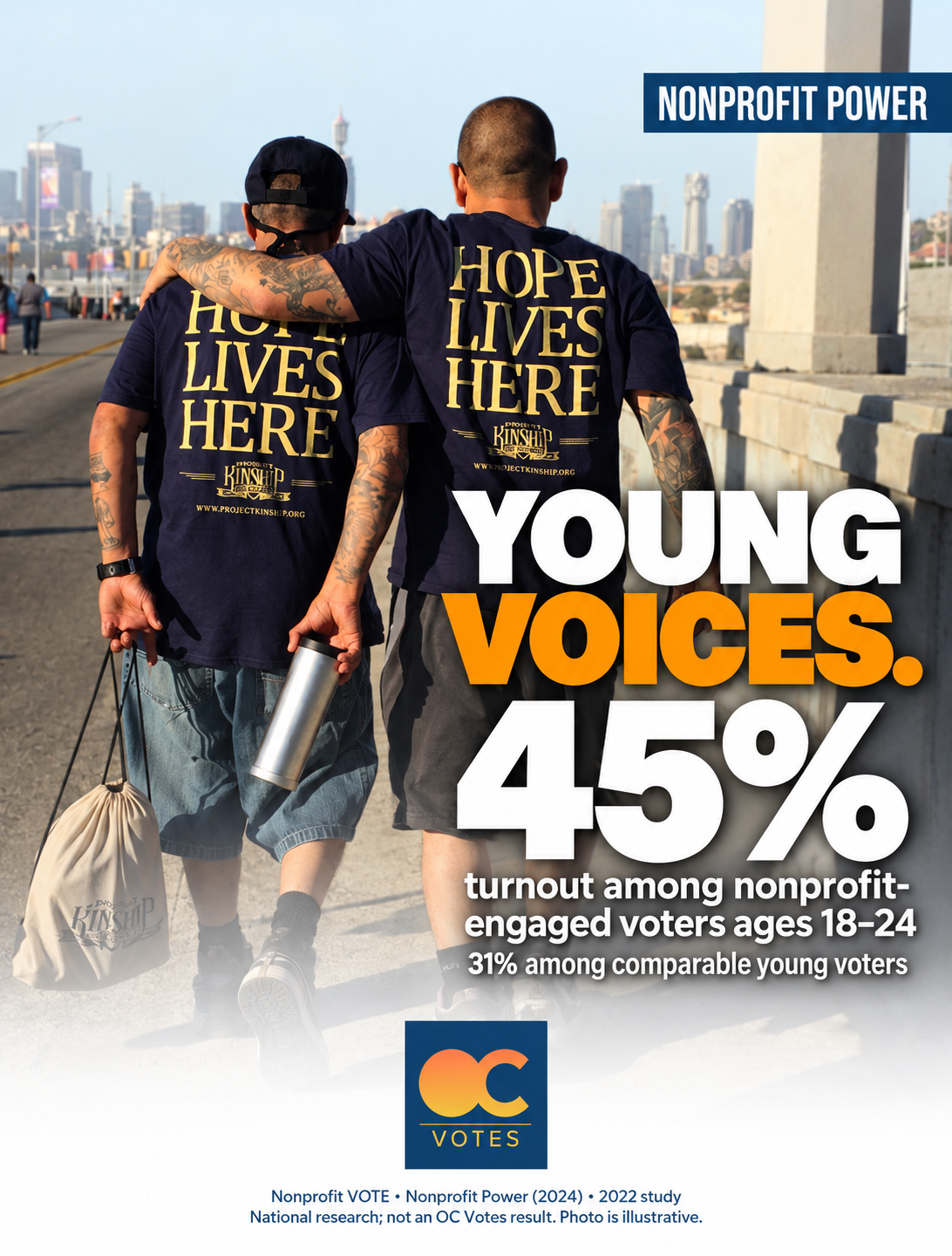
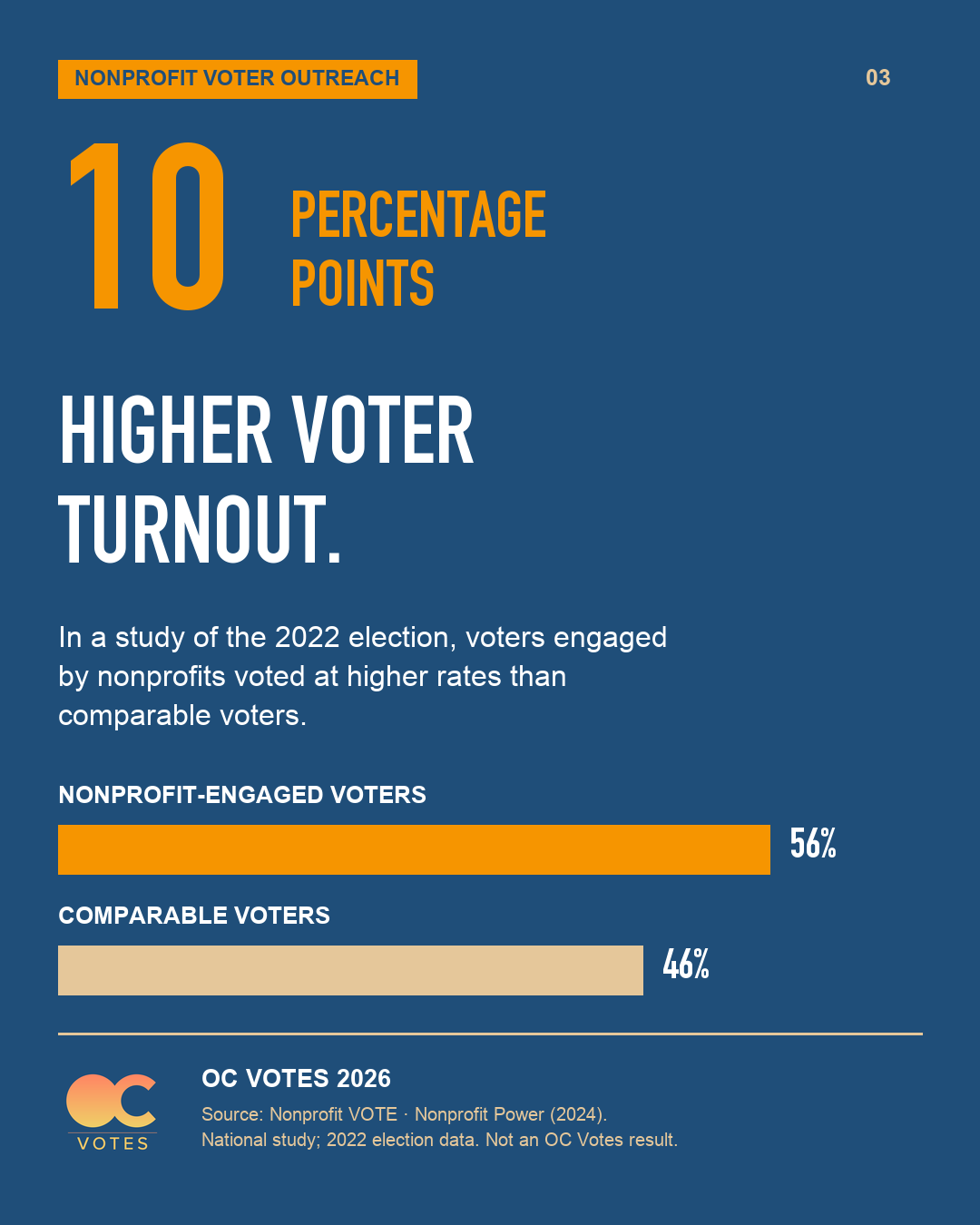
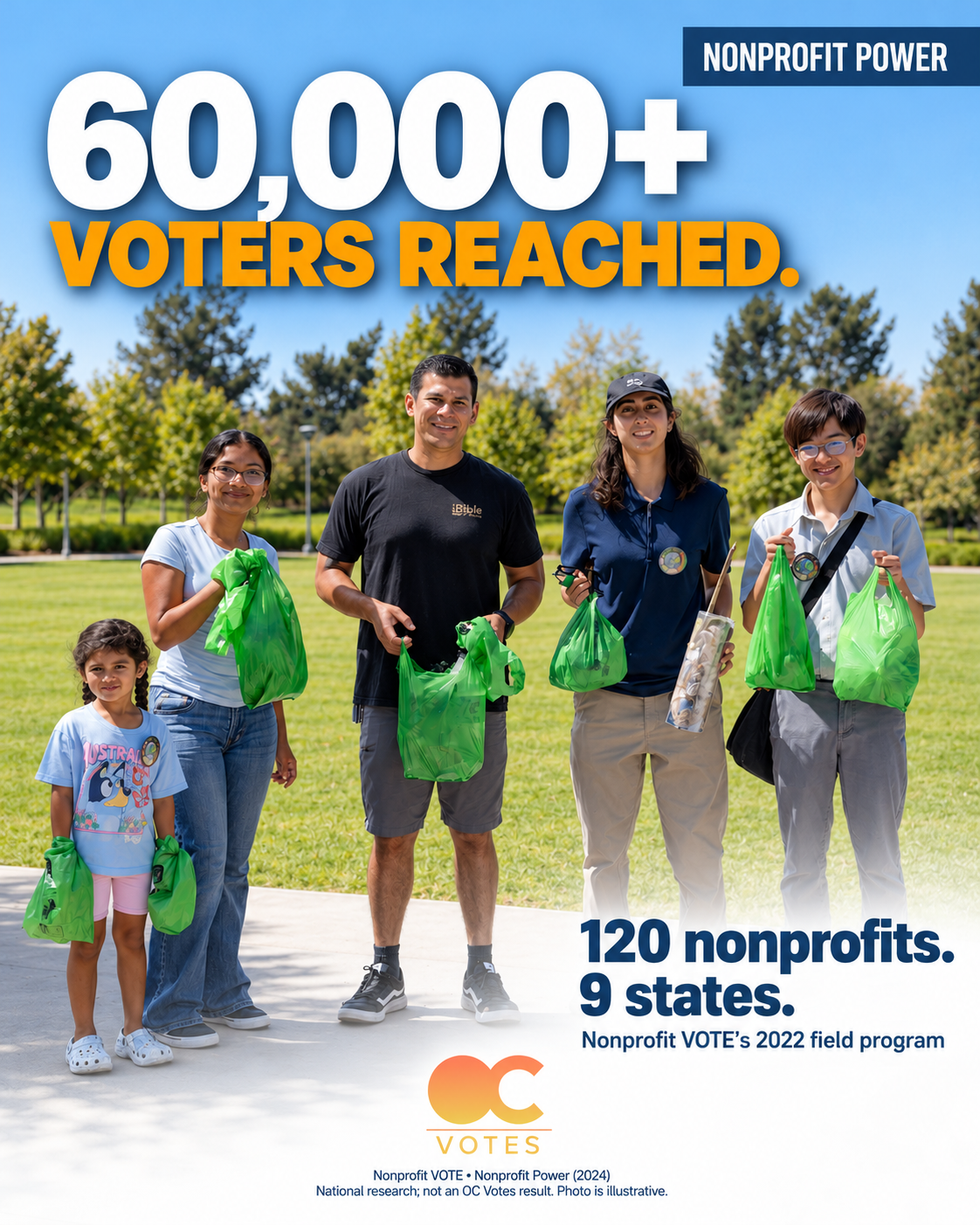
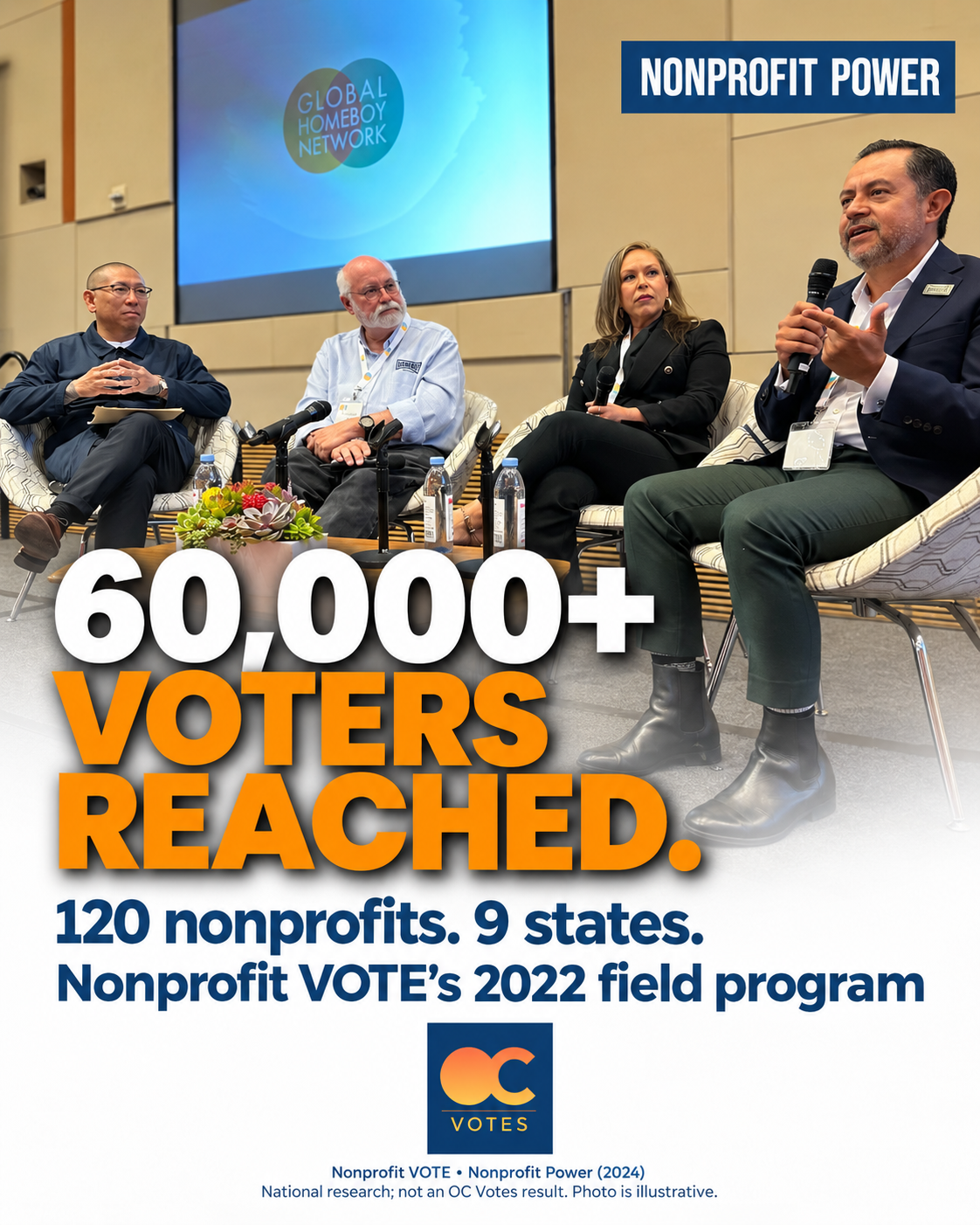
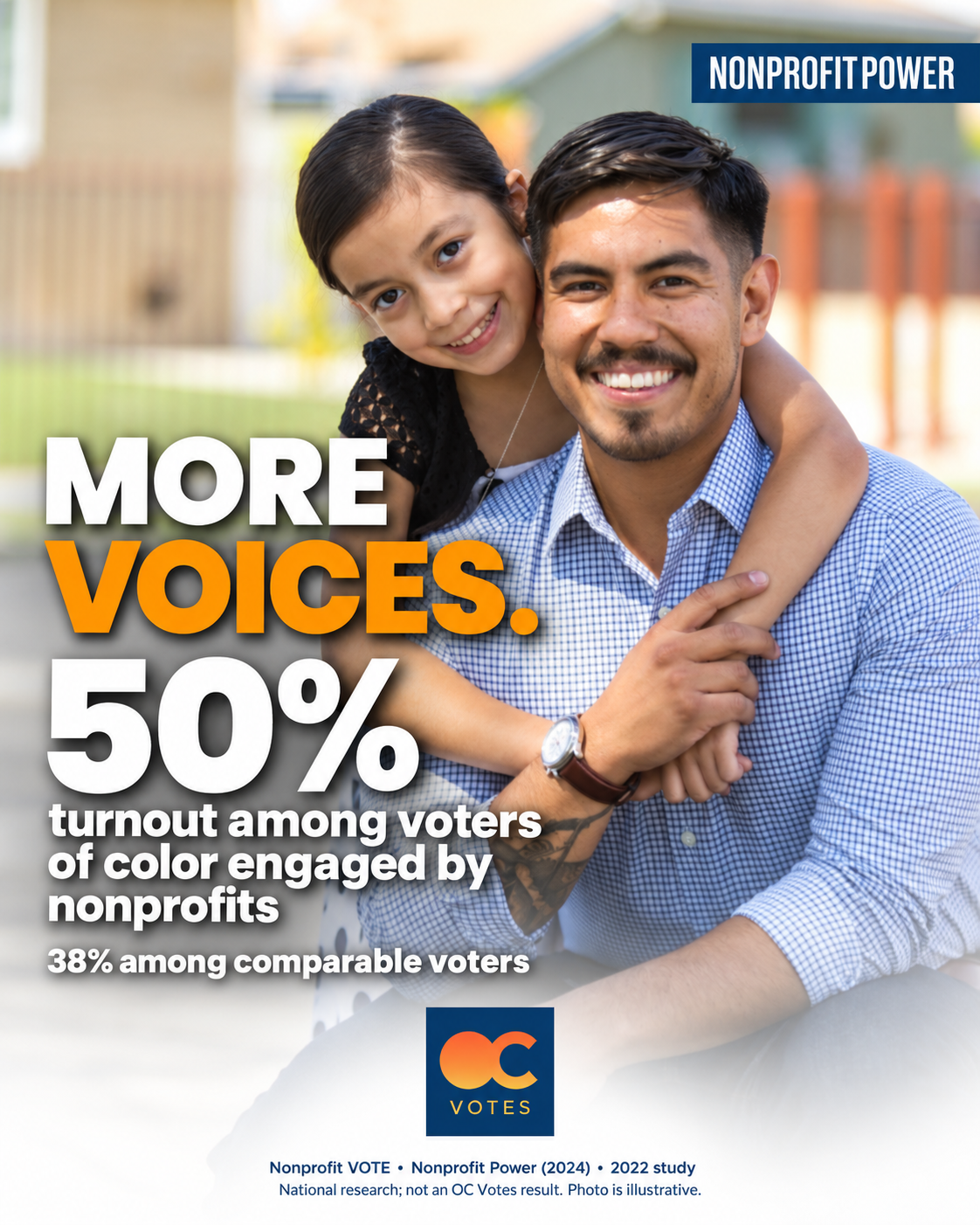
I selected key statistics and directed the social copy and graphics.
What I created
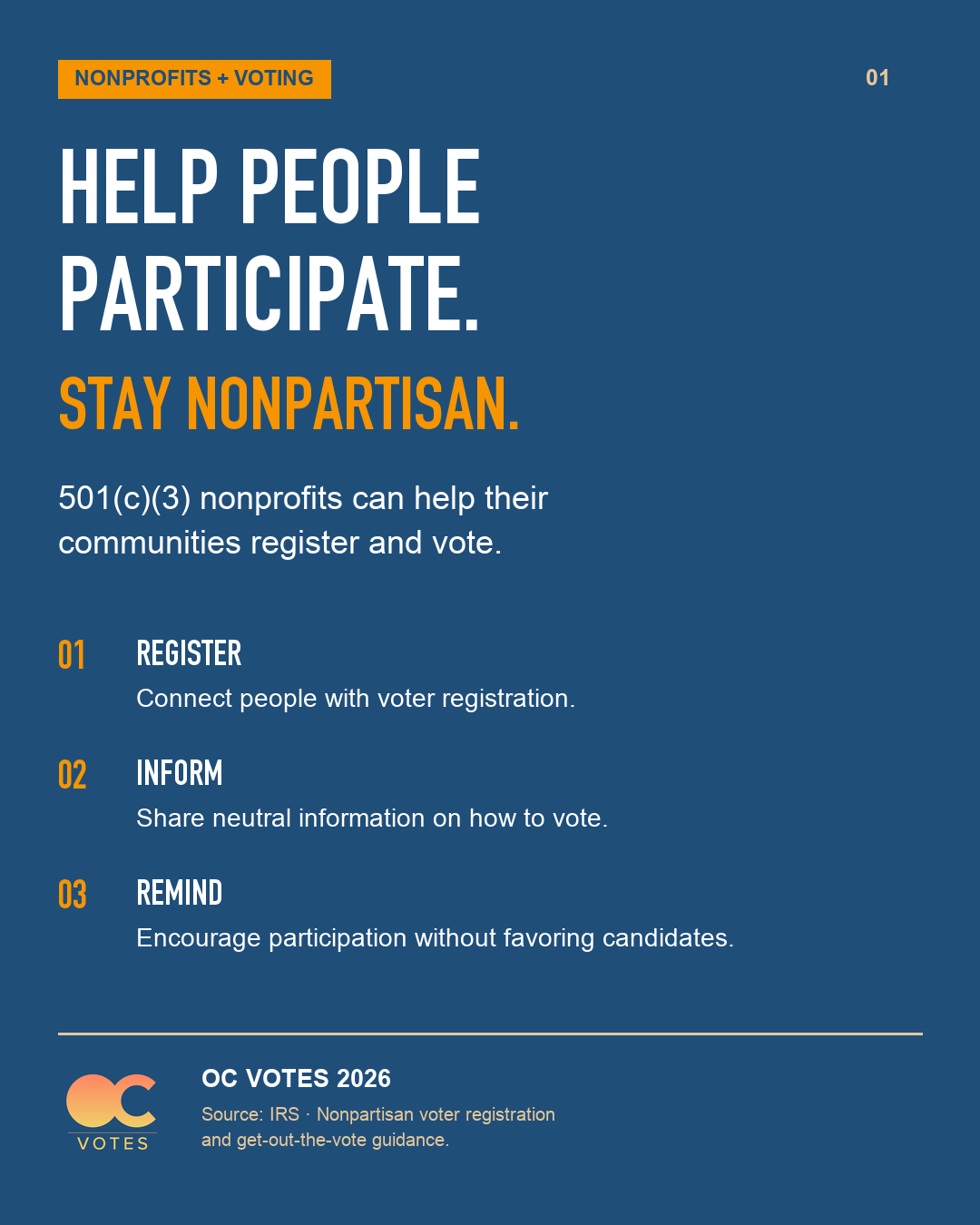
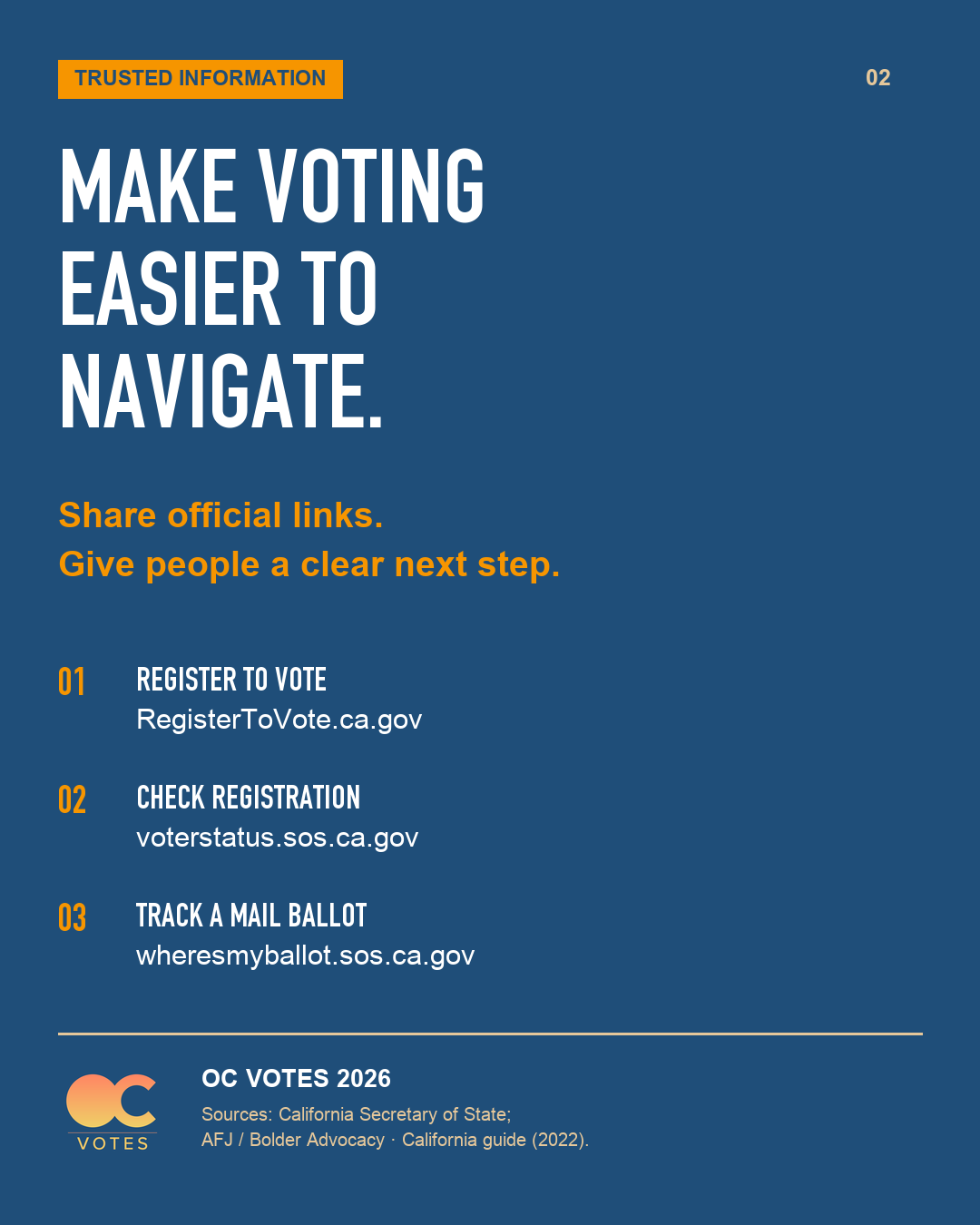
I distilled the guidance into concise, branded social posts.